Table of contents
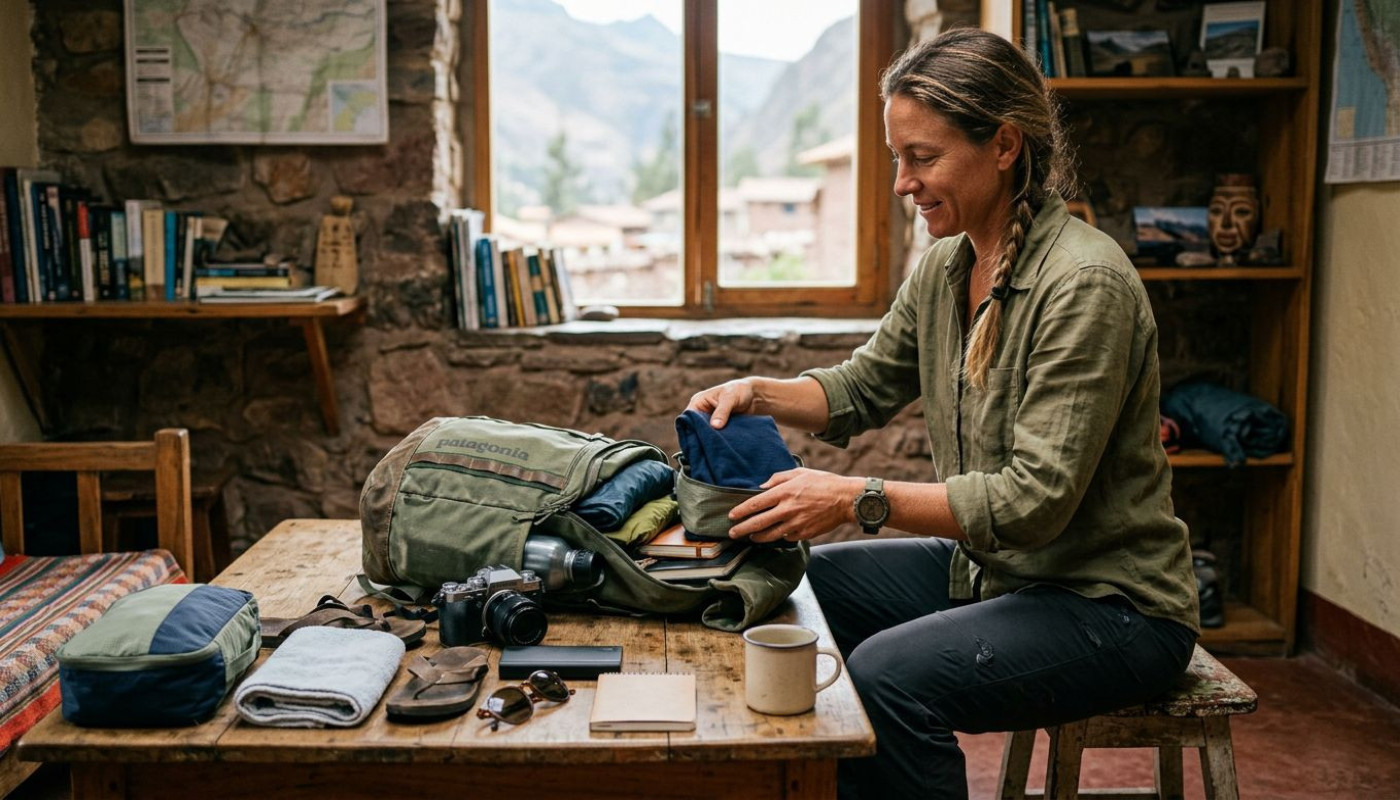
Airlines tighten cabin baggage rules, climate concerns push travelers to cut emissions, and remote work stretches trips without expanding suitcases. Packing light has moved from niche minimalist trend to mainstream travel skill, because fewer kilos mean fewer fees, less stress, and faster movement through crowded hubs. Seasoned explorers, from long-distance hikers to urban nomads, tend to converge on the same truth: what you leave behind matters as much as what you carry, and the discipline pays off daily, from security lines to sudden weather shifts.
Why your bag gets heavy so fast
How does a “small” trip become a bulky one? The weight usually comes from decisions made too early, and from fear disguised as preparation, because the temptation is to pack for every possible scenario instead of the most likely ones. Data from major carriers illustrates the financial nudge: many European and low-cost airlines have turned cabin baggage into a revenue stream, charging for larger carry-ons while enforcing stricter size checks at the gate. In the United States, the Bureau of Transportation Statistics has tracked ancillary airline fees rising over the past decade, and baggage-related charges remain a meaningful slice of that total, a reminder that overpacking is not just inconvenient, it is costly.
The other driver is “duplicate comfort”: extra shoes, backup jackets, second toiletry kits, and bulky “just in case” items that rarely leave the bag. Experienced travelers map their packing around friction points, not fantasies, and friction points are predictable: walking distance, stairs, cobblestones, transit transfers, hotel check-in times, and weather volatility. A bag that feels fine on the bedroom floor can turn punishing after one rushed platform change, and once it is heavy, it changes behavior, because people take taxis instead of walking, skip viewpoints that require climbing, and lose time repacking daily. Packing light, in that sense, is less about aesthetic minimalism and more about protecting mobility, time, and decision-making energy.
There is also a psychological trap: the sunk-cost of space. When travelers choose a large suitcase, they subconsciously “fill to fit,” even if the itinerary is short, and every extra item increases the chance of forgetting something important, such as a passport sleeve, medication, or a charger. Seasoned explorers treat capacity as a constraint that improves focus. They start with the route and activities, then work backward to clothing and gear, and only at the end choose the smallest bag that can realistically carry the plan, because the bag is not the plan, it is the tax you pay to execute it.
The capsule wardrobe that survives anything
Want fewer clothes without feeling underprepared? The trick is to stop packing outfits and start packing systems, and systems rely on interchangeability. Veteran travelers typically build a capsule wardrobe around a tight palette, often two base colors plus one accent, because it multiplies combinations while keeping footwear and outerwear simple. Instead of five tops that each match one specific pair of trousers, they pack three tops that match everything, and they bias toward fabrics that dry overnight, resist odor, and tolerate repeat wear. That is not just anecdotal wisdom: textile performance is measurable, and merino blends, technical synthetics, and certain weaves of nylon have documented advantages in moisture management and dry time compared with heavy cotton, which can retain water and take far longer to dry in humid environments.
Layering replaces bulk. A lightweight insulating mid-layer, a compact rain shell, and a versatile base layer can handle a wide range of temperatures more efficiently than a single thick coat, and it also reduces single-point failure, because one wet or damaged garment does not end the trip. Seasoned explorers treat “one of each” as a default: one warm layer, one rain layer, one comfortable walking shoe, and one slightly dressier option if the itinerary truly demands it. Shoes, in fact, are often the heaviest mistake. Many experienced travelers cap footwear at two pairs, and some go further: one main pair plus packable sandals, because extra shoes add weight, steal volume, and rarely justify the burden unless the trip includes a specific sport.
Laundry is the quiet enabler. If a trip lasts longer than a week, professionals plan for washing, not for packing two weeks of clothing. That can mean sink washing with a small amount of detergent, using quick-dry underwear and socks, and choosing garments that look presentable after air drying. A simple rule emerges: pack for a week, travel for a month. It is not romantic; it is logistical, and it is liberating. With fewer items, travelers can see everything in the bag at once, dress faster, and keep track of essentials without rummaging, and that reduction in daily friction is often what makes the whole approach stick.
What seasoned explorers never compromise on
What is the one thing minimalists still carry? Redundancy, but only where failure is expensive. Experienced travelers cut aggressively in clothing, yet they protect mission-critical items: documents, money access, and health essentials. A small, organized document setup, passport, backup card or a separate payment method, and a secure way to carry them are common priorities, because replacing these on the road is time-consuming and can derail an itinerary. The same logic applies to medication, eyewear, and a compact first-aid kit tailored to the traveler, not a bulky pre-made box full of rarely used items.
Electronics follow a similar hierarchy. A single compact charger with multiple ports, a short cable set, and perhaps a power bank can replace a nest of adapters and bricks, and modern GaN chargers often deliver high wattage in smaller forms. Seasoned explorers also think about failure modes: if the phone is the boarding pass, map, and translation tool, then battery management becomes more important than packing a second pair of jeans. For safety, they keep a digital backup of key documents, stored securely, and they often split valuables between person and bag, so a single loss does not become catastrophic.
Then there is the question of destination-specific reality. Packing light is not ignoring the place; it is adapting precisely to it. Travelers heading to a coastal region, for example, might prioritize breathable layers, packable rain protection, and versatile footwear that handles both city streets and waterfront paths, while leaving behind heavy “maybe” items. Those planning an itinerary that mixes historic towns, islands, and national parks often benefit from local insight on weather patterns, transit, and activity types, because the right packing list is itinerary-driven. For travelers researching routes and practical logistics around the Adriatic, https://www.croatia-spirit.com/ can be a useful starting point to align what goes in the bag with what the days will actually look like.
Small tactics that change everything
Ready for the simplest upgrade? Pack like a professional: with structure. Compression is not magic, but it is management. Packing cubes, or even simple zip pouches, create categories, and categories prevent chaos. Seasoned explorers keep “flight essentials” accessible, such as headphones, a pen, a snack, and a layer for cold cabins, because digging through a tightly packed bag in a narrow seat invites disorder. They also place the heaviest items close to the back and centered, improving comfort and reducing strain, especially if the bag will be carried for long stretches.
The second tactic is to measure, not guess. Travelers who consistently pack light tend to weigh their bag at home, check airline size limits, and test-carry the load, because surprise is the enemy. Many also adopt a one-in, one-out discipline: if a new item is added, another must leave. This prevents “creep,” the slow accumulation of extras that feels harmless until the bag becomes unmanageable. Another professional habit is to pack a small empty space, not to fill later with souvenirs, but to allow for daily repacking without the frustrating need to perfectly compress everything each morning.
Finally, travelers who master light packing treat it as a repeatable routine. They keep a base kit, refine it after each trip, and write down what they used and what they did not. Over time, that creates personal data, more reliable than generic lists. The results show up quickly: faster airport transitions, easier public transport, fewer lost items, and more willingness to take spontaneous detours. Packing light is not deprivation; it is removing the obstacles between you and the trip itself, and once the habit forms, it becomes difficult to go back.
Planning the light way
Book early, and match luggage to rules; cabin limits vary by carrier. Set a realistic budget for fees, laundry, and a compact charger that replaces multiple bricks, and check whether your destination offers tax-free shopping or transport passes. If you qualify for youth, student, or rail discounts, apply them before departure, and keep a little space in your bag for the unexpected.
Similar

Lost Or Found: The Unexpected Joy Of Getting Off Itinerary
Packing Regrets: Overlooked Travel Advice That Changed Real Journeys
Wanderlust Or Burnout: Why Choosing Your Travel Destination Shapes Your Entire Journey
Unexpected Lessons From Getting Lost: Real Stories Behind Spontaneous Travel Routes

Essential Gear For Your Next Mountain Adventure: Rentals And Tips

Exploring The Benefits Of Private Chauffeur Services For Family Vacations

Exploring The Benefits Of Obtaining A Fiscal Number For Relocating To Portugal
