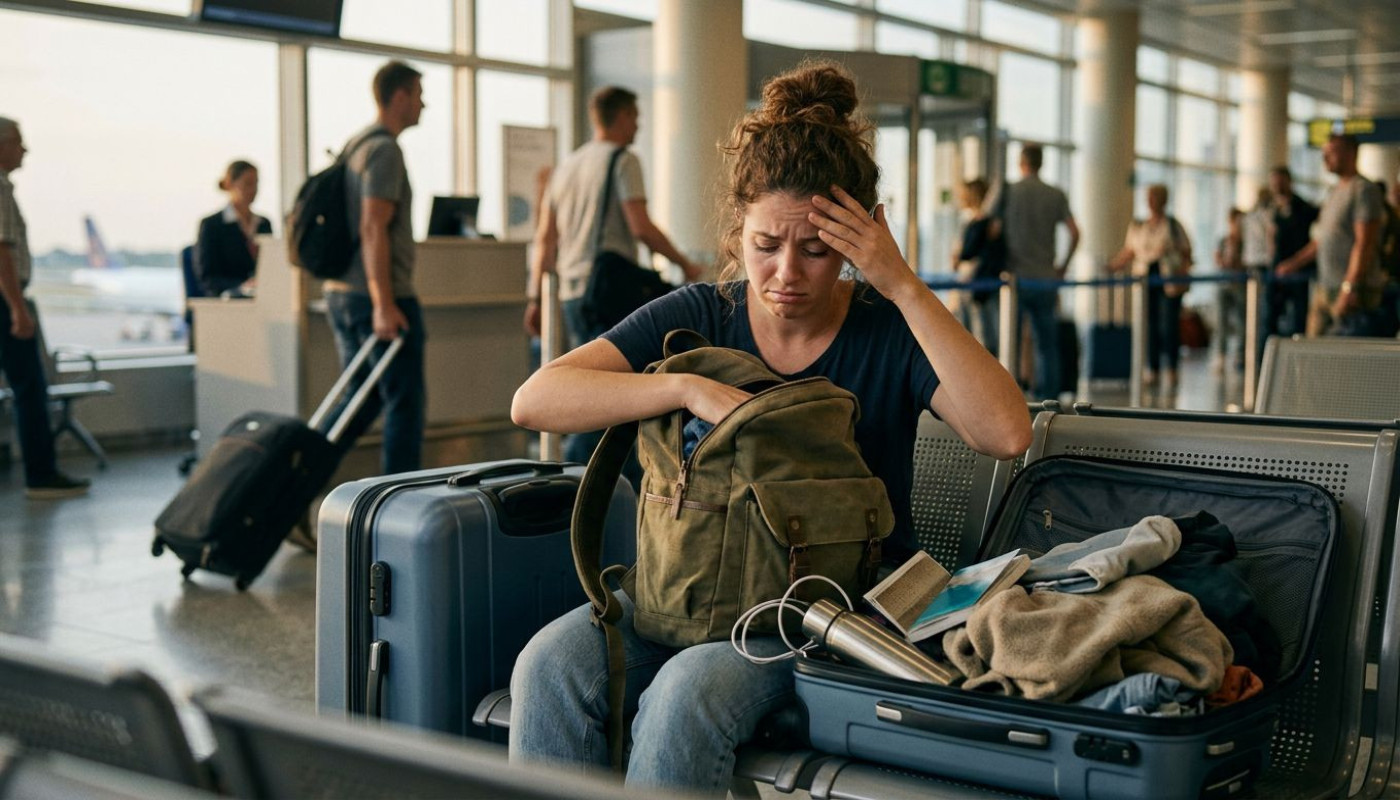
Table of contents
Forgotten chargers, the wrong shoes, a jacket that never leaves the suitcase, many travelers have a “packing regret” story, and in 2026, those stories are getting more expensive. Airlines keep tightening cabin-bag rules, heatwaves are pushing cities to issue health alerts, and tourists are booking closer to departure, which leaves less time to correct small mistakes that snowball. From overlooked documents to the wrong fabric choices, what seemed minor at home can end up reshaping an entire itinerary, sometimes for the better, often for the worse.
“I packed for weather, not reality”
How do you prepare for a place you only know through photos? Many travelers say they packed based on averages, not on the way a destination actually behaves day to day, and the gap between “forecast” and “lived conditions” is widening. Southern Europe is a prime example, because summers have become hotter, longer, and more erratic, with night temperatures staying high and sudden storms disrupting transit. The European climate service Copernicus has repeatedly flagged the region’s trend toward more frequent and intense heat, and even without memorizing each report, you can feel the practical effect on the ground: midday walking becomes punishing, museums and indoor sites turn into refuges, and outdoor plans shift early or late.
That mismatch changes what belongs in a bag. Lightweight clothing is obvious, yet many regret ignoring fabrics and footwear, because cotton that feels fine at home can become heavy and slow to dry, and fashion shoes that “should be okay” can turn into a daily liability on stone streets and long distances. Packing advice that sounds boring often proves decisive: a breathable layer for indoor air-conditioning, a compact refillable bottle, electrolyte packets, and one truly reliable pair of walking shoes. Travelers also increasingly mention sun protection as a non-negotiable, not an accessory, because UV exposure is cumulative and a severe burn can wipe out the best-planned day trips. The lesson is not to overpack “just in case”, it is to pack with the rhythm of the destination, and to assume you will walk more than you think.
Low-cost rules made baggage a gamble
The sticker price is rarely the final price, and the suitcase is where the arithmetic can turn brutal. Budget airlines have refined a model in which the cheapest fare comes with strict limits, and passengers who miss the fine print pay at the airport, where fees are highest. In Europe, carry-on and checked baggage policies vary sharply by carrier, route, and ticket type, and even frequent flyers report getting caught when a “personal item” sizer is enforced aggressively. The European Commission and consumer groups have debated standardization for years, yet travelers still navigate a patchwork, and that uncertainty has turned packing into a financial risk.
Regrets often come from timing rather than ignorance. People buy a ticket months out, pack based on habit, then discover near departure that their fare only allows a small under-seat bag, or that their return leg is on a partner airline with different rules. That is how a seemingly small choice, like bringing a hard-shell cabin case, can cost more than a museum pass or a local excursion. The practical fix is unglamorous but effective: check dimensions in centimeters, not “small/medium”, weigh the bag fully packed, and keep one foldable tote as a pressure valve for the return trip. Travelers also advise packing a “compliance kit”, meaning a portable luggage scale and a slim compression bag, because the airport is the worst place to learn that souvenirs have pushed you over the limit. When budgets are tight, avoiding one baggage penalty can fund a full day of experiences.
One missing document can erase a day
Who thinks about paperwork when the trip is supposed to be freedom? Yet the most painful packing regrets are not about clothes, they are about documents and digital access, because those failures can lock you out of hotels, rental cars, and even your own money. Passports are the obvious worry, but seasoned travelers point to quieter traps: an expired ID needed for domestic flights, a bank that flags foreign transactions, a phone that cannot receive authentication texts, or travel insurance details that are buried somewhere in an inbox you cannot reach. In the era of app-based everything, losing access to your device can feel like losing the trip itself.
Simple redundancies prevent major losses. Photocopies used to be the gold standard, and they still help, but travelers increasingly rely on a layered approach: printed confirmations for the first night, offline maps, and a second payment method stored separately. Even a small power bank, fully charged, can be the difference between boarding and being stranded at the gate when a digital pass fails to load. The other overlooked tool is time: building a buffer on arrival day, especially when landing late, because the first evening is when mistakes compound. Travelers who underestimated administrative friction often look back and wish they had treated the first 24 hours as a “soft landing”, with fewer moving parts and fewer bookings that require perfect timing. When the essentials are secure, spontaneity becomes enjoyable again, not stressful.
The best tip was choosing a base
Is it better to see more places, or to see one place properly? A growing number of travelers say their biggest regret was not about packing at all, it was about the structure of the trip, and the revelation came when they chose a strong base rather than hopping nightly. The reason is practical: every check-out and check-in eats hours, increases the chance of losing items, and turns luggage into a constant companion, which is the opposite of what most people want. A base also makes it easier to pack lighter, because you can do laundry once, and you can return to the same room to drop off purchases and recharge.
This is where destination-specific planning becomes more valuable than generic advice. Travelers who used local guides and curated itineraries often report fewer “I wish I’d known” moments, because they understood which neighborhoods are walkable, where public transport works best, and how day trips actually feel in real time. Those heading to Spain’s Mediterranean coast, for example, frequently mention that having a hub with clear, tested options for beaches, culture, and nearby excursions changed the entire flow of the journey, and that they ended up packing with confidence rather than fear. Practical resources such as https://www.valencia-trip.com can help travelers see what is realistically doable from one base, compare timings, and avoid the classic mistake of planning like a spreadsheet instead of a vacation. In the end, the smartest “packing advice” may be the itinerary that lets you unpack once, and then live the city instead of dragging it around in a suitcase.
What to do before you zip up
Book early for peak weeks, and lock your baggage rules in writing. Set a realistic daily budget, including one cushion for airport fees or taxis, and check whether local or regional travel cards can cut transport costs. If you qualify for youth, senior, or resident discounts, gather proof now, and keep it accessible, because the savings often depend on documentation.
Similar

Lost Or Found: The Unexpected Joy Of Getting Off Itinerary
The Art Of Packing Light: Lessons From Seasoned Explorers

Wanderlust Or Burnout: Why Choosing Your Travel Destination Shapes Your Entire Journey

Unexpected Lessons From Getting Lost: Real Stories Behind Spontaneous Travel Routes

Essential Gear For Your Next Mountain Adventure: Rentals And Tips

Exploring The Benefits Of Private Chauffeur Services For Family Vacations

Exploring The Benefits Of Obtaining A Fiscal Number For Relocating To Portugal
